Tóm tắt
Hướng đề xuất: Không dùng AI để vẽ lại cả trang sách. Thay vào đó, artist giữ nguyên trang đã được duyệt (background, layout, chữ, đạo cụ). AI chỉ sinh ra các nhân vật gia đình đã được cá nhân hoá (em bé, bố, mẹ, anh chị em, ông bà…). Hệ thống sẽ tự động ghép (composite) các nhân vật này lên trang gốc của artist.
Lý do lựa chọn hướng này: tranh minh hoạ của artist được bảo toàn pixel-perfect (chính xác từng điểm ảnh) trên mọi đơn hàng. AI chỉ tác động vào phần thay đổi theo từng gia đình — các thành viên trong gia đình. Kết quả: chất lượng thương hiệu nhất quán, output dự đoán được, quy trình duyệt đơn giản hơn.
Trạng thái hiện tại: Công nghệ cá nhân hoá đã được kiểm chứng trên 4 nhóm sắc tộc (ethnicities) × toàn bộ 34 trang của sách T16 (với nhân vật em bé). Bước kế tiếp: mở rộng sang cá nhân hoá người lớn và cảnh nhiều nhân vật, đồng thời chuyển sang quy trình sản xuất đề xuất với các layer do artist chuẩn bị.
Kế hoạch sản xuất đề xuất
Quy trình gồm ba giai đoạn, mỗi giai đoạn có người phụ trách và đầu ra cụ thể.
Giữ nguyên trang đã duyệt
Trang hoàn chỉnh của artist — background, đạo cụ, layout, typography (kiểu chữ) — giữ nguyên 100%. AI không được phép sửa. Đây là “sân khấu” để đặt nhân vật cá nhân hoá lên.
Chỉ sinh các nhân vật gia đình
AI nhận ảnh các thành viên gia đình (em bé, bố, mẹ, anh chị em, ông bà…) và chỉ vẽ ra từng nhân vật theo phong cách watercolor (màu nước) của FoxeTales, khớp đúng pose (tư thế) của bản gốc. Mỗi nhân vật là một ảnh sạch với background trong suốt (transparent).
Tự động ghép lại
Hệ thống đặt các nhân vật mới lên trang đã duyệt dựa trên placement (vị trí), mask (vùng nhân vật) và shadow (đổ bóng) do artist cung cấp — theo đúng thứ tự lớp (Z-order) khi có nhiều nhân vật cùng cảnh. Mọi đơn hàng đều canh chỉnh giống nhau — không cần chỉnh tay từng đơn.
Kết quả: phần tranh quan trọng với thương hiệu được “khoá”, phần cá nhân hoá theo từng gia đình được xử lý tự động, và toàn bộ bước lắp ráp hoàn toàn deterministic (cho ra kết quả nhất quán).
👨👩👧 Phạm vi cá nhân hoá: cả gia đình, không chỉ em bé
FoxeTales kể chuyện về gia đình → nhiều trang có bố, mẹ, anh chị em, ông bà cùng xuất hiện với em bé. Pipeline phải xử lý được:
- Cá nhân hoá người lớn — bố / mẹ / ông bà — từ ảnh khách hàng, đúng style FoxeTales.
- Cảnh nhiều nhân vật — em bé + bố mẹ trong cùng một trang. Mỗi người là một layer riêng, ghép theo đúng vị trí và lớp trước/sau.
- Giữ identity nhất quán — cùng một người lớn xuất hiện ở nhiều trang phải nhận ra được là cùng một người.
- Tương tác giữa nhân vật — bố ôm bé, mẹ nắm tay bé… cần xử lý occlusion (vật/người che nhau) khi composite.
Quy trình hoạt động
Lộ trình xử lý một trang trong một đơn hàng:
Background và layout của trang không đi qua AI; chỉ các nhân vật trong gia đình được xử lý bởi AI. Thiết kế của artist do đó được bảo toàn nguyên vẹn trên mọi đơn hàng.
Kết quả kiểm chứng
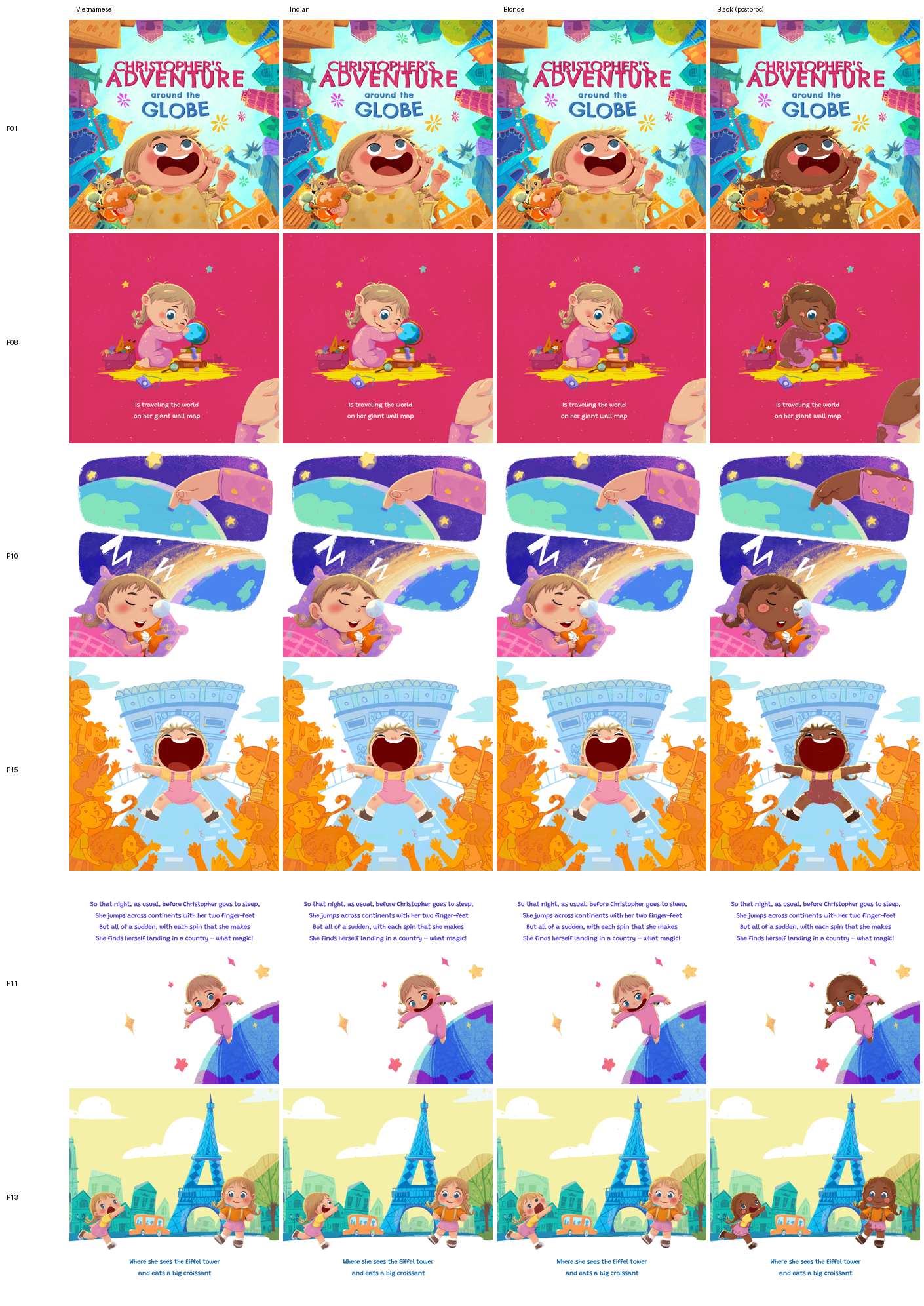
Pipeline cá nhân hoá nhân vật em bé đã được kiểm chứng trên toàn bộ sách (34 trang) và trên nhiều sắc tộc khác nhau, đảm bảo chất lượng ổn định ở quy mô sản xuất.
Phạm vi đã kiểm chứng: nhân vật em bé — cả cảnh đơn và cross-page. Phạm vi bước kế: người lớn (bố, mẹ, ông bà) và cảnh nhiều nhân vật — chi tiết ở mục “Bước tiếp theo”.
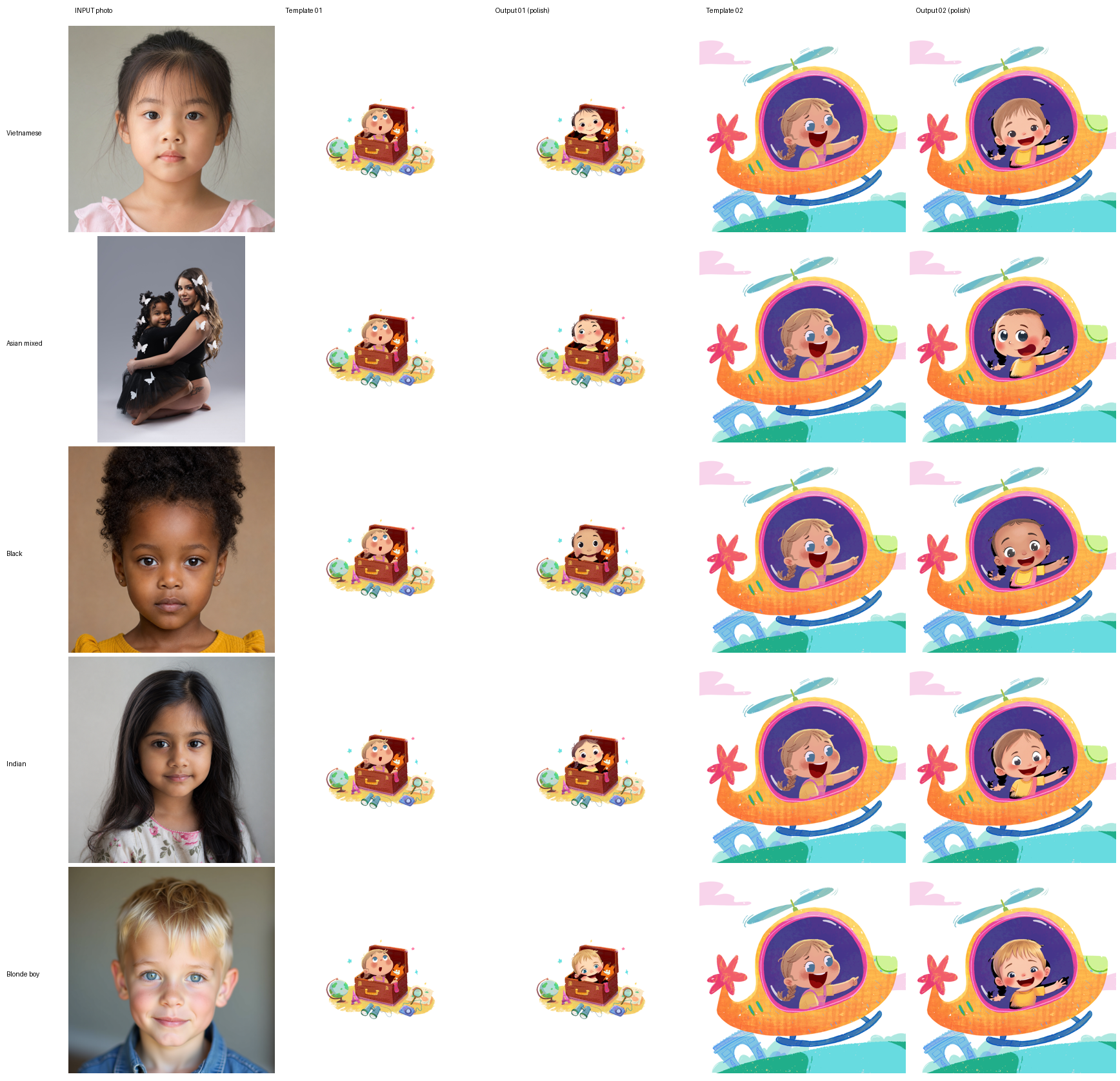
Sheet 1: 5 sắc tộc × 2 template
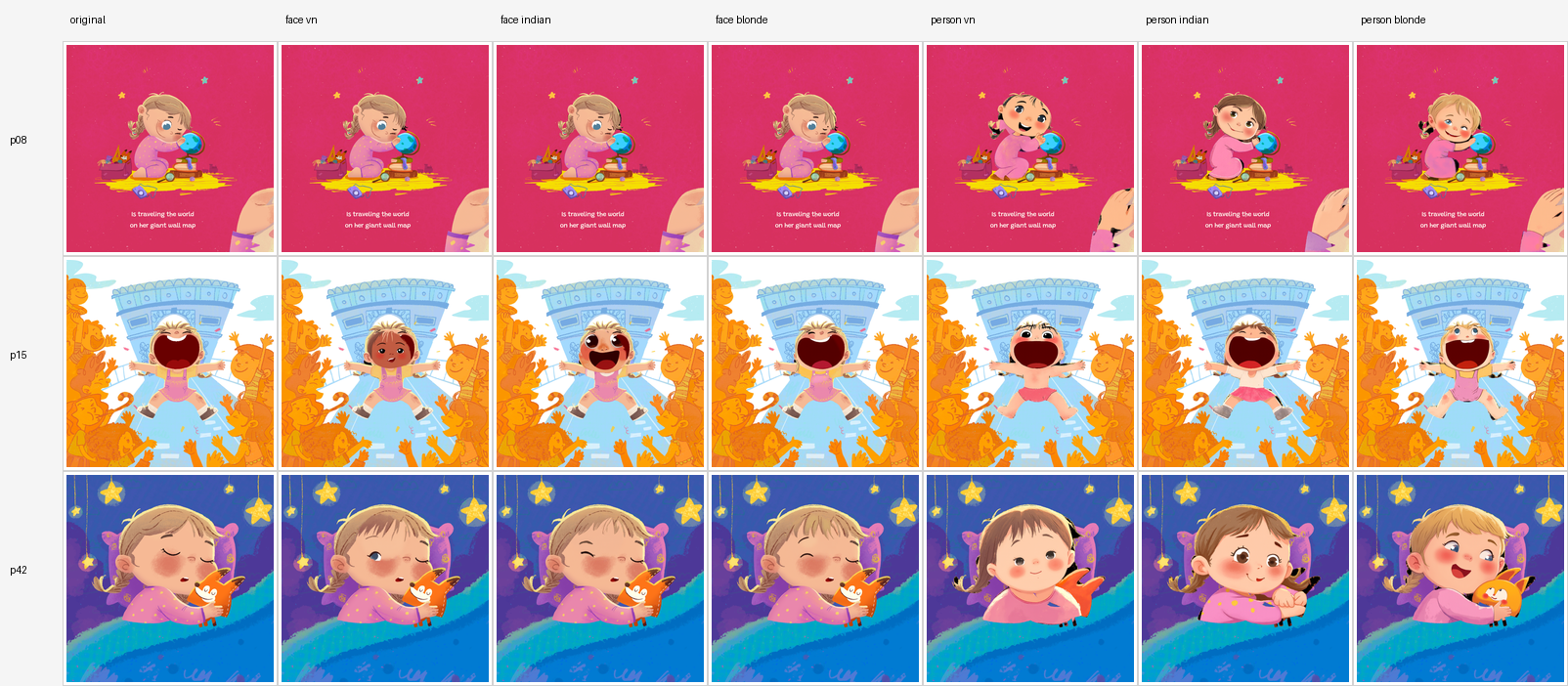
Sheet 2: So sánh 2 cách cá nhân hoá
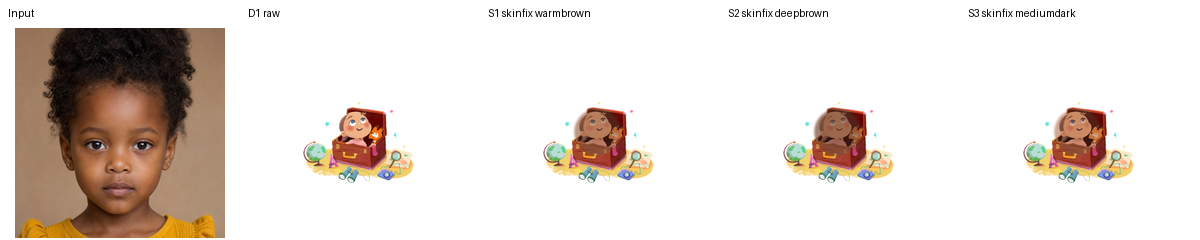
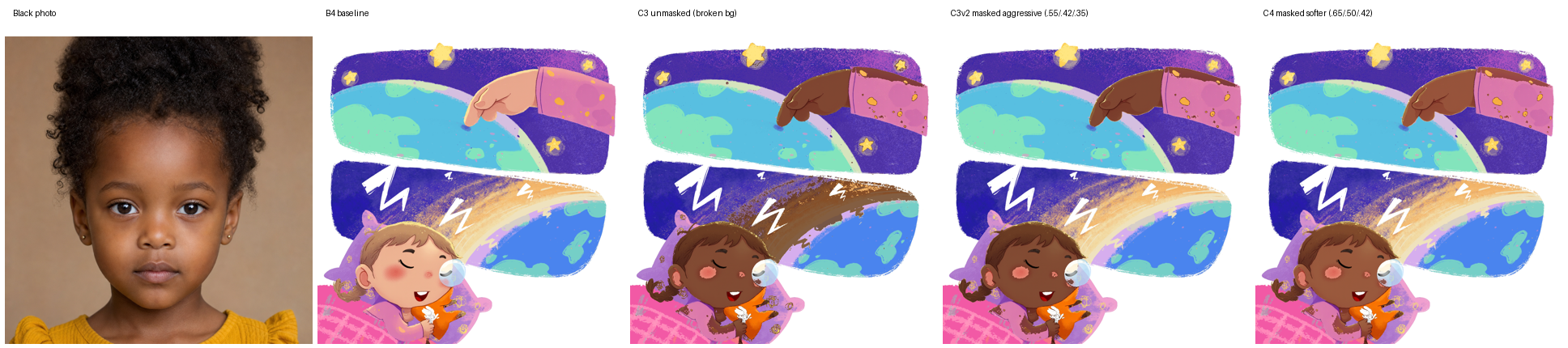
Sheet 3: Thử thách với tông da (và cách khắc phục)
Sheet 4: Setting được đề xuất (winner)
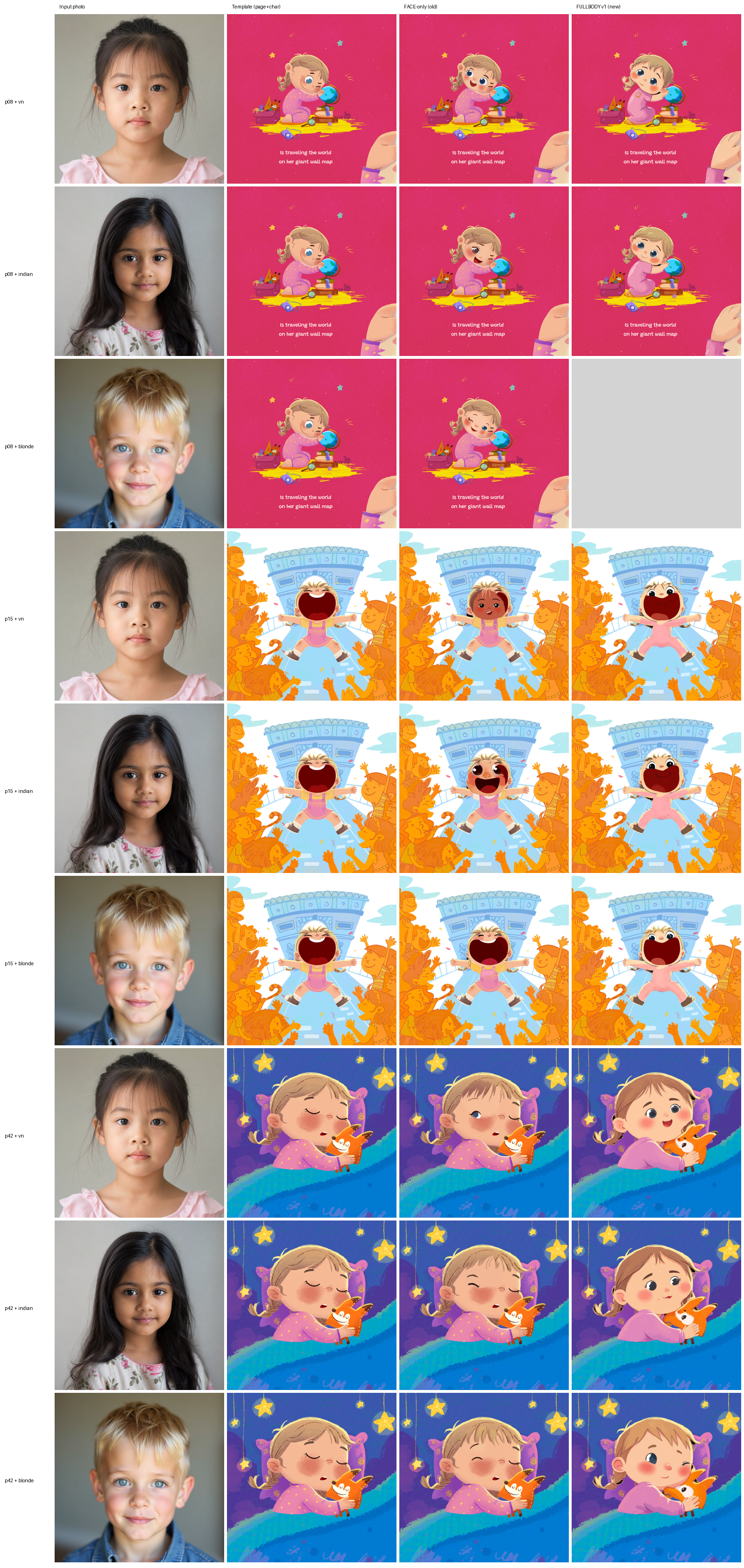
Sheet 5: Hậu xử lý tông da (skin post-process)
Sheet 6: Kiểm chứng trên toàn bộ sách
Em chạy cá nhân hoá trên toàn bộ 34 trang của T16, cho 4 sắc tộc khác nhau — tổng cộng 136 lần render. Bên dưới hiển thị 6 trang tiêu biểu × 4 sắc tộc.
So sánh phương án sản xuất
Bảng so sánh các phương án sản xuất đã được đánh giá, kèm khuyến nghị và cơ sở lựa chọn:
| Phương án | Diễn giải | Khuyến nghị |
|---|---|---|
| Sinh layer nhân vật + auto-composite (sinh riêng nhân vật rồi ghép tự động) | Artist khoá trang và background. AI chỉ sinh em bé cá nhân hoá dưới dạng layer trong suốt. Hệ thống tự ghép lại theo placement, mask, shadow do artist cung cấp. | ✓ Hướng sản xuất đề xuất |
| Full-page / full-character inpainting (AI sửa lại nguyên trang) | AI vẽ lại phần lớn trang (nhân vật + pixel xung quanh) trong một lần. Prototype nhanh, nhưng đơn nào AI cũng chạm vào tranh của artist. | Chỉ dùng dự phòng (fallback) cho trang nào hướng layer chưa làm được |
| Variant assets làm style reference + fallback | Artist chuẩn bị sẵn vi bộ variant tiêu biểu (boy/girl × light/dark skin) cho mỗi trang. AI vẫn sinh nhân vật cho từng đơn, nhưng bám theo variant làm reference để đúng style; variant cũng làm fallback cho ca AI fail. | ✓ Bổ trợ cho hướng chính — đã đưa vào “Cần từ Artist” |
| Pre-drawn variants thuần (vẽ sẵn mọi tổ hợp, không dùng AI) | Artist vẽ tay mọi tổ hợp giới tính × tóc × sắc tộc × trang. Cá nhân hoá chỉ là chọn variant khớp nhất. | ✗ Không scale được — gấp bội khối lượng vẽ tay và mất feel “giống đúng con tôi” |
Cơ sở khuyến nghị: trang của artist không bị tác động trên mỗi đơn, kết quả nhất quán và dễ review, hệ thống deterministic (cùng input → cùng output). Hướng full-page được giữ lại như phương án dự phòng cho các ca đặc biệt.
Phân tích chi phí
Mô hình chi tiết: 📄 Bản phân tích chi phí đầy đủ
Kinh tế mỗi đơn hàng
| Hạng mục | Chi phí | Ghi chú |
|---|---|---|
| AI compute mỗi đơn (~35 trang + preview) | ~$1.61 | Serverless GPU, khoảng 51 phút compute |
| + Buffer an toàn (cold start, retry) | $0.40 | Margin cho production |
| + Storage, database, CDN | $0.06 | Lưu trữ + phân phối file |
| Tổng / đơn | ~$2.07 (~53,000 VND) | Ổn định khi scale lên |
Chi phí hàng tháng theo quy mô
| Đơn / tháng | 1,000 | 2,500 | 5,000 | 7,500 | 10,000 |
|---|---|---|---|---|---|
| GPU hours (ước tính) | 854 | 2,134 | 4,268 | 6,402 | 8,536 |
| GPU cost (raw) | $1,614 | $4,034 | $8,067 | $12,101 | $16,134 |
| + buffer + storage + monitoring | $503 | $1,185 | $2,291 | $3,426 | $4,552 |
| Tổng / tháng | ~$2,117 | ~$5,219 | ~$10,358 | ~$15,527 | ~$20,686 |
| Chi phí / đơn | $2.12 | $2.09 | $2.07 | $2.07 | $2.07 |
Bối cảnh doanh thu
Tham chiếu ngành: Wonderbly bán sách cá nhân hoá $40–60. Chi phí AI ~$2/đơn ≈ ~5% doanh thu — margin rất khoẻ.
Dư địa tối ưu: có thể giảm thêm ~40% chi phí với khoảng 1 tuần tối ưu sau khi launch.
Bước tiếp theo
Lộ trình chuyển từ công nghệ đã kiểm chứng sang quy trình sản xuất đề xuất.
Yêu cầu đối với Artist team
Để triển khai quy trình sản xuất đề xuất, mỗi trang pilot cần có bộ tài liệu sau:
-
background_without_characters.png— trang đã duyệt với tất cả nhân vật gốc đã được bóc ra (em bé + bố mẹ + người thân nếu có), để em có “sân khấu” sạch đặt các nhân vật cá nhân hoá lên. -
Layer nhân vật gốc — một file cho mỗi nhân vật trên trang. Ví dụ một trang có bé + mẹ + bố → cần 3 file:
p07_child.png,p07_mother.png,p07_father.png. Mỗi file: nhân vật trên background trong suốt, cùng kích thước canvas với trang. Dùng để tham chiếu pose, tỉ lệ, style. -
Mask cho từng nhân vật —
p07_child_mask.png,p07_mother_mask.png… Dùng để composite chính xác và giữ viền sắc nét. - Placement metadata + Z-order (thứ tự lớp trước/sau) — toạ độ, tỉ lệ, góc xoay của từng nhân vật; và ai đứng trước / ai đứng sau khi có nhiều người cùng cảnh. Một file dữ liệu ngắn (hoặc ghi chú đơn giản) để composite chính xác từng pixel.
- Ghi chú shadow / occlusion / tương tác — đổ bóng của từng người; vật nào đè/che lên ai; có tương tác giữa nhân vật không (bố ôm bé, mẹ nắm tay bé…). Giúp em giữ chiều sâu và độ thật khi composite.
- 5–10 bộ ảnh gia đình thật có consent (đồng ý sử dụng) — mỗi bộ gồm ảnh em bé, bố, mẹ (và người thân nếu có) — phục vụ việc kiểm chứng pipeline trên dữ liệu thực tế.
Bộ variant nhân vật (ưu tiên cao)
Bên cạnh bộ layer cho 5 trang pilot ở trên, artist chuẩn bị thêm các asset variant cho cả em bé và người lớn. Hai mục đích sử dụng: làm style reference (tham chiếu phong cách) cho AI và làm fallback cho các ca AI không đạt yêu cầu.
A. Variant em bé (ưu tiên 1 — cần cho pilot)
| Variant | Đặc điểm | File suggested |
|---|---|---|
| Bé trai · da trắng | Tóc ngắn, tông da sáng | child_boy_short_light.png |
| Bé trai · da màu | Tóc ngắn, tông da sậm | child_boy_short_dark.png |
| Bé gái · da trắng | Tóc dài, tông da sáng | child_girl_long_light.png |
| Bé gái · da màu | Tóc dài, tông da sậm | child_girl_long_dark.png |
B. Variant người lớn (ưu tiên 2 — cần cho sách gia đình)
Sách FoxeTales kể chuyện gia đình nên phải có variant cho người lớn:
| Variant | Đặc điểm | File suggested |
|---|---|---|
| Mẹ · da trắng | Tóc dài, tông da sáng | mother_long_light.png |
| Mẹ · da màu | Tóc dài, tông da sậm | mother_long_dark.png |
| Bố · da trắng | Tóc ngắn, tông da sáng | father_short_light.png |
| Bố · da màu | Tóc ngắn, tông da sậm | father_short_dark.png |
C. Variant mở rộng (ưu tiên 3 — càng nhiều càng tốt)
- Ông / bà — tóc bạc, phụ kiện (kính, mũ len…)
- Anh / chị — thiếu niên, khoảng 10–16 tuổi
- Em bé nhỏ hơn — toốt / sơ sinh
- Biến thể phụ: kiểu tóc khác (xoăn, ngắn, búi…), phụ kiện (kính, hình xăm, hình dáng người khác…)
Mỗi variant cần: nhân vật trên background trong suốt (transparent), cùng pose với nhân vật gốc của trang đó, cùng kích thước canvas. Pool càng đa dạng, AI bám style càng chính xác.
Lưu ý: các variant này không thay thế AI sinh nhân vật. Vai trò của variant là (1) style reference để AI bám đúng phong cách FoxeTales cho cả em bé và người lớn, và (2) fallback cho các ca AI không đạt yêu cầu. Artist không phải vẽ tay cho từng đơn khách.